The Rising Threat of Phishing: One Click Can Cost You Everything
An in-depth look at modern phishing tactics, the role of AI in cybercrime, and how to defend against evolving digital threats.
One click can cost you everything.
People let's be honest. When was the last time you went a full day without touching your phone? Days, months, years? You don't even remember do you?
Don't worry. It's not exactly a bad thing if you know what you have gotten yourself into. We're all living in a digital world now, whether you like it or not.
In this mess of the modern web, not every message that arrives in your inbox or every link that appears on your phone is actually from where it claims to be from. And that's not sugarcoating or even exaggerating it. That's the harsh reality.
Cybercrimes are common now, as common as the fact that people all over the world now have smartphones. There are N number of ways for cybercriminals to exploit human trust, but phishing remains the most ubiquitous, adaptive, and psychologically manipulative threat. It's not just pushing the envelope anymore; it's rewriting the entire rulebook of digital deception.
But before we dive deeper, we must get our facts straight: "What is Phishing?"
At its core, phishing is a cybercrime that uses deception to trick individuals into revealing confidential information such as passwords, banking credentials, or personal data by masquerading as a legitimate or trusted source.
The word "phishing" originates from the word "fishing", where the victim's information is used as bait (a fake email, text, or website) to hook someone into giving up their sensitive data.
Phishing can take the form of fraudulent emails pretending to be from banks or government agencies. A user would receive a message like:
"Your account has been suspended due to suspicious activity. Click here to verify your details."
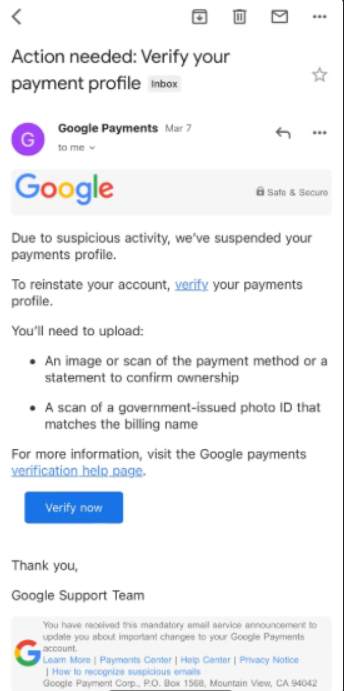
Once you click on this, it's over. It could take you to a fake website that would do wonders for the criminals and be a worst nightmare for you. It can steal your login information, redirect you to an even steeper situation, or worse, it could install malware in the background without you knowing.
Simple. Manipulative. Deadly.
It is not just E-Mails
Phishing isn't confined to email. It has its own multi-channel ecosystem that includes:
- Smishing: SMS-based phishing
- Vishing: Voice phishing over calls
- Whaling: Targeted high-level attacks
- Social media scams: Fake profiles, cloned pages
It doesn't break systems, it breaks trust.
Even AI-generated phishing bots are building their own methodology and approach in the world of phishing, where threat actors use Generative AI (GenAI) to craft realistic and personalized messages like lures.
There was a time when phishing was a game of numbers, where attackers sent millions of generic emails, hoping a few careless clicks would bait innocents. Today things have changed. According to the Zscaler ThreatLabz 2025 Phishing Report, the global volume of phishing attacks dropped by 20%. But this decline has a darker truth.
Instead of spamming thousands of emails, nowadays threat attackers perform targeted attacks specifically on departments and individuals, from Fin-Tech or HR teams to school administrators, with messages tailored using AI and personal data. By mimicking writing styles, domain structures, or even the tone of real employees, these hyper-personalized phishing campaigns have dramatically increased their success rates.
They're not just plugged into your digital life, they're studying it.
Phishing attacks on educational institutions skyrocketed by 224% in 2024, making it one of the fastest-growing targets worldwide.
The reason is simple: schools and universities are drowning in personal data but defending it with simple and extinct security systems. For cybercriminals, it's like finding an unlocked vault.
Meanwhile, Business Email Compromise (BEC) scams where attackers impersonate executive level officers or vendors continue to cost organizations billions. In 2023 alone, BEC reported an increase in financial loss to $2.9 billion globally, according to the APWG Phishing Trends Report.
There have been mass reporting of new trends where attackers deploy deepfake impersonations, cloned real voices or faces, and use CAPTCHA-based evasion to outwit automated scanners. With Generative AI, phishing lures are linguistically perfect, emotionally manipulative, and contextually tailored using scraped personal data.
Beneath the surface, sophisticated phishing kits, command-and-control infrastructures, and newly registered domains command these attacks with near-military precision. Phishing no longer breaks systems; it compromises your psychology, exploiting emotion before logic.
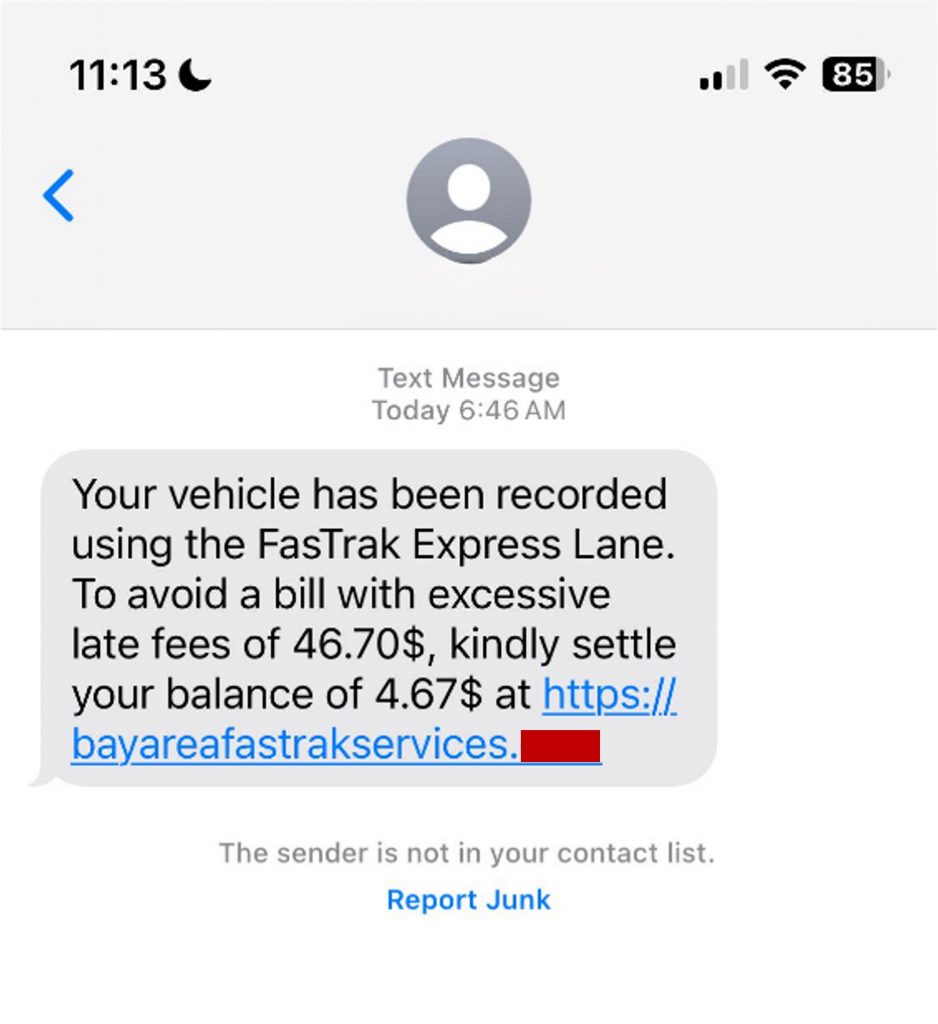
"To avoid a bill with excessive late fees..."
This single line can trigger panic before reason, as seen in the APWG's 2025 report, where phishers flooded phones using .TOP domains and fake road-fine alerts. This manipulation shows urgency, authority, and curiosity: psychological triggers that override critical thinking.
With AI as their accomplice, cybercriminals now impersonate IT helpdesks or recruiters in fake job scams, executing over 159 million such attacks in 2024. They sound real, respond real, and adapt like real humans.
Social media is amplifying the danger, serving as both a bait and a malware delivery channel. A study by Zscaler shows the most used platforms for phishing:
| Platform | Phishing Attacks Observed in Zscaler Cloud |
|---|---|
| Telegram | 1,119,969 |
| 692,761 | |
| Steam | 507,203 |
| 323,087 | |
| 276,677 | |
| Vkontakte | 46,912 |
| Discord | 39,314 |
| 9,270 | |
| X (Twitter) | 3,663 |
| YouTube | 1,456 |
Telegram alone saw over 1.1 million phishing attacks. These are the platforms you use daily, now being weaponized against you. Attackers have also outsmarted AI defenses through model poisoning, embedding benign-sounding comments to mislead scanners.
In 2025, phishing stands as a fully automated, data-informed, AI-augmented deception engine. One that manipulates humans and machines alike.
The impact of phishing doesn't end at stolen credentials; it cascades into financial hemorrhages and institutional instability worldwide. According to IBM's 2024 Cost of a Data Breach Report, the United States continues to lead with an average breach cost of $9.36 million.
| # | Country/Region | 2024 (USD M) | 2023 (USD M) |
|---|---|---|---|
| 1 | United States Of America | $9.36 | 9.48 |
| 2 | Middle East | 8.75 | 8.07 |
| 3 | Benelux | 5.09 | -- |
| 4 | Germany | 5.31 | 4.67 |
| 5 | Italy | 4.73 | 3.86 |
| 6 | Canada | 4.66 | 5.13 |
| 7 | United Kingdom | 4.53 | 4.21 |
| 8 | Japan | 4.19 | 4.52 |
| 9 | France | 4.17 | 4.08 |
| 10 | Latin America | 4.16 | 3.69 |
| 11 | South Korea | 3.62 | 3.48 |
| 12 | ASEAN | 3.23 | 3.05 |
| 13 | Australia | 2.78 | 2.70 |
| 14 | South Africa | 2.78 | 2.79 |
| 15 | India | 2.35 | 2.18 |
Cost of breach by country or region (measured in USD millions) Source
The global phishing landscape is a paradox: total attack volume has dropped, but precision and financial impact have surged. By poisoning AI detection models and mimicking voices through deepfakes, they're making attacks stealthier and more profitable.
The Human Firewall
In this digital tug-of-war, individuals are becoming more mature through awareness and authentication. The human firewall is evolving. Global initiatives now empower users to report phishing attempts to alliances like APWG and law enforcement through IC3.
Companies are also stepping up. Google's sender authentication reported blocking 265 billion malicious emails in 2024, driving phishing down by 31.8% in the U.S. alone.
At an enterprise level, digital guardians are using AI-based threat detection systems to identify deceiving patterns, moving from reactive to predictive defense.
The advent of Zero Trust architectures has changed the concept of trust: "Security is a myth", no user, device, or request is trusted without verification, and re-verification is constant.
Conclusion
While the U.S. is making significant strides, it still remains the most targeted country globally. However, the trend clearly shows that defense strategies at the cutting-edge have the desired effect.
This war against phishing has just begun. But with the right tools, awareness, and vigilance, we will defeat phishing attacks like warriors. At AstraQ, we are building the future of cyber defense.