Building a Polymorphic Workload Orchestrator with Go and Kubernetes
Learn how to build a scalable control plane for on-demand AI agents and data tasks using Go interfaces, Redis queues, and Kubernetes.
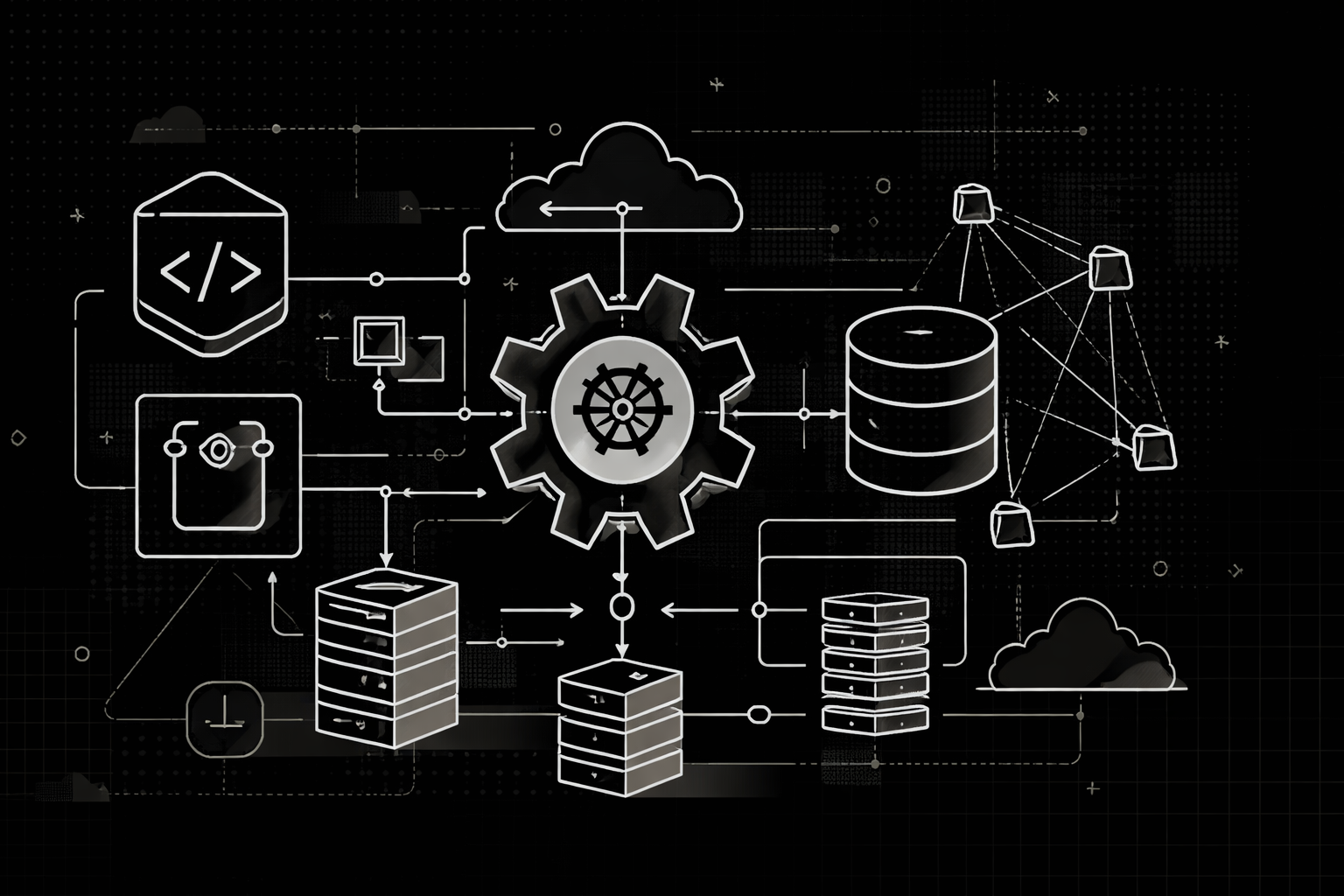
Series: Secure Workload Orchestration
- Part 1Building a Polymorphic Workload Orchestrator with Go and Kubernetes
- Part 2Hardening the Control Plane: From Pods to MicroVMs
- Part 3Zero-Trust Networking for AI Agents: Protecting Your Internal VPC
- Part 4Enterprise Audit Logging and Monitoring: The Missing Piece of the Control Plane
- Part 5Control Plane Resilience: Handling Cascading Failures in Distributed Orchestration
In the era of AI agents and on-demand data processing, static infrastructure doesn't cut it. You might need to spin up a secure sandbox for a user's code one second, and a heavy data aggregation job the next. Standard Kubernetes Deployments are great for long-running services, but they struggle with the dynamic, ephemeral nature of these "per-request" workloads.
In this guide, we'll build a Polymorphic Workload Orchestrator in Go. This control plane will allow us to dynamically spawn, manage, and scale down isolated execution environments, whether they are standard Kubernetes Pods or secure MicroVMs, using a unified interface.
The Problem: "One Size Fits None"
Imagine you're building a platform that needs to handle two distinct types of tasks:
- Trusted Internal Tasks: Data aggregation, report generation. Fast startup is key; isolation is less critical.
- Untrusted User Code: AI agents executing Python scripts. Security and hard isolation are non-negotiable.
Hardcoding kubectl apply commands for every new feature creates a maintenance nightmare. We need an abstraction layer.
The Solution: A Go Control Plane
We will build a "Control Plane" service in Go that consumes tasks from a Redis queue and provisions infrastructure accordingly.
The Architecture
Implementation Guide
Defining the Interface
The core of our polymorphic design is the WorkloadRuntime interface. This allows our application logic to remain agnostic to the underlying infrastructure.
go
package runtime

import "context"

// Spec defines the requirements for the workload
type Spec struct {
    Image       string
    Env         map[string]string
    Resources   ResourceRequests
    Type        WorkloadType // "trusted" or "untrusted"
}

// WorkloadRuntime abstracts the infrastructure provider
type WorkloadRuntime interface {
    // Provision spawns the infrastructure
    Provision(ctx context.Context, id string, spec Spec) error

    // Status checks if the workload is ready
    Status(ctx context.Context, id string) (Status, error)

    // Teardown cleans up resources (auto-close logic)
    Teardown(ctx context.Context, id string) error
}
By coding to this interface, we can simply swap implementations based on the Spec.Type.
The Kubernetes Implementation
For our "Trusted" workloads, we'll implement this interface using client-go to manage Kubernetes Pods directly. This is faster and more lightweight than full Deployments for ephemeral tasks.
go
package kubernetes

import (
    "context"
    corev1 "k8s.io/api/core/v1"
    metav1 "k8s.io/apimachinery/pkg/apis/meta/v1"
    "k8s.io/client-go/kubernetes"
)

type K8sRuntime struct {
    clientset *kubernetes.Clientset
    namespace string
}

func (k *K8sRuntime) Provision(ctx context.Context, id string, spec runtime.Spec) error {
    pod := &corev1.Pod{
        ObjectMeta: metav1.ObjectMeta{
            Name: "job-" + id,
            Labels: map[string]string{
                "managed-by": "orchestrator",
                "job-id":     id,
            },
        },
        Spec: corev1.PodSpec{
            RestartPolicy: corev1.RestartPolicyNever,
            Containers: []corev1.Container{
                {
                    Name:    "main",
                    Image:   spec.Image,
                    Env:     toK8sEnv(spec.Env),
                },
            },
        },
    }

    _, err := k.clientset.CoreV1().Pods(k.namespace).Create(
        ctx,
        pod,
        metav1.CreateOptions{},
    )
    return err
}
The Event Loop (Redis)
To handle scale and backpressure, we don't spawn pods directly from the HTTP handler. We use an asynchronous event loop with Redis.
The Producer (API Layer):
Instead of kubectl apply, we push a JSON payload to Redis.
go
task := Task{
    ID:   "req-123",
    Type: "trusted", // or "untrusted"
    Cmd:  "./process-data",
}
redisClient.LPush(ctx, "workload_queue", json.Marshal(task))
The Consumer (Control Plane): The worker reads from Redis and selects the right runtime.
go
func (w *Worker) Start(ctx context.Context) {
    for {
        // Blocking pop from Redis
        result, _ := w.redis.BRPop(ctx, 0, "workload_queue").Result()

        var task Task
        json.Unmarshal([]byte(result[1]), &task)

        // POLYMORPHISM IN ACTION
        var runtime WorkloadRuntime
        if task.Type == "untrusted" {
             // In Part 2: runtime = NewFirecrackerRuntime()
             log.Printf("Using Secure Sandbox for %s", task.ID)
        } else {
             runtime = w.k8sRuntime
        }

        go w.handleTask(ctx, runtime, task)
    }
}
Auto-Close and Lifecycle
One of the biggest challenges with ephemeral workloads is "zombie" resources. We can implement a "Lease" pattern using Redis Keys with TTL (Time To Live).
- Heartbeat: The running Pod sends a heartbeat to Redis every 10s.
SET session:req-123:heartbeat OK EX 30 - Reaper: A control plane goroutine checks for expired keys.
- Teardown: If the key expires, call
runtime.Teardown(id).
go
func (w *Worker) ReapZombies(ctx context.Context) {
    ticker := time.NewTicker(30 * time.Second)
    for range ticker.C {
        // Logic to find active jobs without heartbeats
        // call runtime.Teardown()
    }
}
Deploying the Control Plane
To make this work in a real cluster, our Go orchestrator needs permission to spawn Pods. Here are the manifests:
1. RBAC Permissions
The worker needs a ServiceAccount bound to a Role that can create, get, and delete pods.
manifests/rbac.yaml
apiVersion: v1
kind: ServiceAccount
metadata:
  name: workload-orchestrator
  namespace: default
---
apiVersion: rbac.authorization.k8s.io/v1
kind: Role
metadata:
  name: pod-manager
  namespace: default
rules:
  - apiGroups: [""]
    resources: ["pods"]
    verbs: ["create", "get", "list", "delete"]
---
apiVersion: rbac.authorization.k8s.io/v1
kind: RoleBinding
metadata:
  name: orchestrator-binding
  namespace: default
subjects:
  - kind: ServiceAccount
    name: workload-orchestrator
    namespace: default
roleRef:
  kind: Role
  name: pod-manager
  apiGroup: rbac.authorization.k8s.io
2. The Deployment
Deploy the Go binary. Ensure it has the REDIS_URL environment variable.
manifests/deployment.yaml
apiVersion: apps/v1
kind: Deployment
metadata:
  name: orchestrator
  namespace: default
spec:
  replicas: 1
  selector:
    matchLabels:
      app: orchestrator
  template:
    metadata:
      labels:
        app: orchestrator
    spec:
      serviceAccountName: workload-orchestrator
      containers:
        - name: manager
          image: astraq/orchestrator:v1
          env:
            - name: REDIS_URL
              value: "redis://redis-service:6379"
3. Testing It Out
Detailed commands to deploy and verify:
$> # 1. Apply RBAC and Deployment
kubectl apply -f manifests/rbac.yaml
kubectl apply -f manifests/deployment.yaml

# 2. Tail the logs to see the worker starting
kubectl logs -f -l app=orchestrator

# 3. Trigger a workload manually via Redis (for testing)
# We assume you have a redis pod running at 'redis-service'
kubectl run redis-client --image=redis --restart=Never -- redis-cli -h redis-service \
  LPUSH workload_queue '{"id":"test-1", "type":"trusted", "image":"alpine", "cmd":["echo", "hello"]}'
Conclusion and What's Next
We've built a robust foundation. Our Application Layer is decoupled from the Infrastructure Layer via the WorkloadRuntime interface. We can currently spawn generic Kubernetes Pods for trusted tasks.
But what about those untrusted AI agents? Running rm -rf / in a container is still dangerous.
In Part 2, we will implement the FirecrackerRuntime struct. We'll show how to use the exact same interface to spin up micro-VMs that offer hardware-level isolation for hostile workloads, without changing a single line of our API code.