Hardening the Control Plane: From Pods to MicroVMs
Securing your workload orchestrator by swapping standard Containers for Firecracker MicroVMs using Kata Containers and the Go WorkloadRuntime interface.
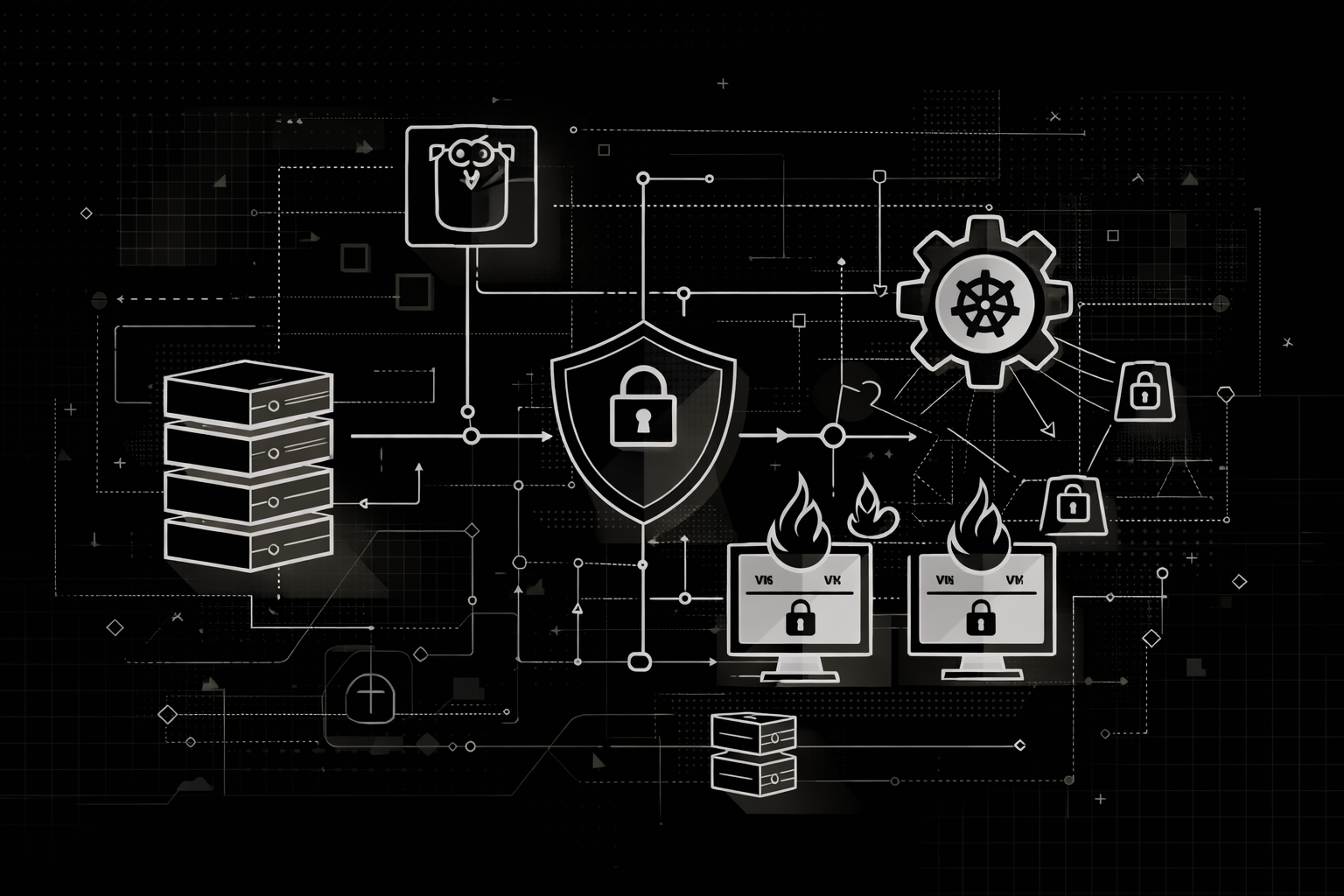
Series: Secure Workload Orchestration
- Part 1Building a Polymorphic Workload Orchestrator with Go and Kubernetes
- Part 2Hardening the Control Plane: From Pods to MicroVMs
- Part 3Zero-Trust Networking for AI Agents: Protecting Your Internal VPC
- Part 4Enterprise Audit Logging and Monitoring: The Missing Piece of the Control Plane
- Part 5Control Plane Resilience: Handling Cascading Failures in Distributed Orchestration
In Building a Polymorphic Workload Orchestrator with Go and Kubernetes, we built a scalable control plane using Go and Redis. We successfully decoupled our application logic from the infrastructure using the WorkloadRuntime interface.
However, we left off with a critical security gap: we were still running untrusted user code in standard Kubernetes Pods. In this post, we'll fix that by implementing a Secure Runtime using MicroVMs.
The Threat: Why Containers Aren't Enough
Standard Docker containers share the host Linux kernel. A malicious user with root access inside a container can potentially exploit kernel vulnerabilities to escape the sandbox and access other users' data.
For "Untrusted" workloads (like arbitrary code execution agents), we need hardware virtualization.
The Solution: Kata Containers & Firecracker
It's important to understand the role of each component:
- Firecracker is the Hypervisor (VMM). It's the engine that actually creates and runs the microVM. It's incredibly fast but speaks a low-level API.
- Kata Containers is the Kubernetes Shim. It acts as a bridge. It speaks the language of Kubernetes (CRI) on one side and manages the Firecracker process on the other.
We don't need to throw away Kubernetes to get VM security. Kata Containers allows us to use Firecracker as a backend for our Pods.
To our Go control plane, they look like Pods. To the kernel, they are isolated VMs.
We certainly could, but then we'd have to reinvent the wheel. By using Kubernetes as a "dumb scheduler," we get:
- Bin Packing: K8s automatically finds nodes with free CPU/RAM.
- Networking (CNI): K8s handles IP assignment and routing for us.
- Lifecycle Management: Kubelet automatically monitors process health.
This approach lets us focus on the orchestration logic rather than rebuilding basic infrastructure plumbing.
Updating the Architecture
We don't need to change our Redis loop or our Go worker logic. We just need a new implementation of Provision.
Kubernetes Configuration
First, we need to register the Kata runtime class in our cluster.
manifests/runtime-class.yaml
apiVersion: node.k8s.io/v1
kind: RuntimeClass
metadata:
  name: kata-fc
handler: kata-fc
overhead:
  podFixed:
    memory: "120Mi"
    cpu: "250m"
The Firecracker Runtime Implementation
Now we create the FirecrackerRuntime in Go. It's almost identical to our generic K8sRuntime, but with one key difference: it requests the kata-fc RuntimeClass.
go
package kubernetes

import (
    "context"
    corev1 "k8s.io/api/core/v1"
    metav1 "k8s.io/apimachinery/pkg/apis/meta/v1"
    "k8s.io/client-go/kubernetes"
)

type FirecrackerRuntime struct {
    clientset *kubernetes.Clientset
    namespace string
}

// Ensure it satisfies the interface
var _ runtime.WorkloadRuntime = &FirecrackerRuntime{}

func (f *FirecrackerRuntime) Provision(ctx context.Context, id string, spec runtime.Spec) error {
    runtimeClassName := "kata-fc" // The magic switch

    pod := &corev1.Pod{
        ObjectMeta: metav1.ObjectMeta{
            Name: "secure-job-" + id,
            Labels: map[string]string{
                "managed-by": "orchestrator",
                "security":   "high",
                "job-id":     id,
            },
        },
        Spec: corev1.PodSpec{
            RuntimeClassName: &runtimeClassName,
            RestartPolicy:    corev1.RestartPolicyNever,
            Containers: []corev1.Container{
                {
                    Name:    "main",
                    Image:   spec.Image, // e.g., "my-agent-sandbox:latest"
                    Env:     toK8sEnv(spec.Env),
                    // Hard resource limits are critical for VMs
                    Resources: corev1.ResourceRequirements{
                         Limits: corev1.ResourceList{
                             corev1.ResourceCPU:    resource.MustParse("1"),
                             corev1.ResourceMemory: resource.MustParse("512Mi"),
                         },
                    },
                },
            },
        },
    }

    _, err := f.clientset.CoreV1().Pods(f.namespace).Create(
        ctx,
        pod,
        metav1.CreateOptions{},
    )
    return err
}
Wiring It Up
Back in our worker's event loop, we can finally uncomment the logic we hinted at in Part 1.
go
func (w *Worker) Start(ctx context.Context) {
    // Initialize both runtimes
    stdRuntime := &kubernetes.K8sRuntime{clientset: w.kube}
    vmRuntime := &kubernetes.FirecrackerRuntime{clientset: w.kube}

    for {
        // ... get task from Redis ...

        var runtime WorkloadRuntime

        if task.Type == "untrusted" {
             runtime = vmRuntime
             log.Printf("🔒 Spawning Secure MicroVM for %s", task.ID)
        } else {
             runtime = stdRuntime
             log.Printf("🚀 Spawning Standard Pod for %s", task.ID)
        }

        go w.handleTask(ctx, runtime, task)
    }
}
Why This Matters
By using Runtime Classes, we've kept our application logic clean. We aren't managing FIRECRACKER sockets or TAP devices heavily in our Go code; we're offloading that complexity to Kubernetes and Kata.
Our Go Orchestrator remains a high-level control plane.
Conclusion
We now have a system that is:
- Polymorphic: Handles different workload types.
- Scalable: Managed via Redis queues.
- Secure: Uses hardware virtualization for untrusted agents.
In Part 3, we'll look at Networking. How do we let these agents talk to the internet (or specific internal APIs) without letting them scan our internal VPC?